South Dakota Top Blogs

News, notes, and observations from the James River Valley in northern South Dakota with special attention to reviewing the performance of the media--old and new. E-Mail to MinneKota@gmail.com

Saturday, January 8, 2022

Words to ponder while circling the drain: The Big Lie
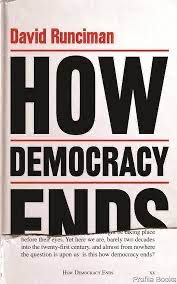
One of many books on the subject

The occasion seemed special.  Nearly all official travel when I was stationed in Germany was done in the back of an Army two-and-a-half-ton truck, unless I was assigned to drive.  This time, however, the Army sent a bus.

For a week another man and I had to get up early, grab a quick breakfast, and walk to the post gate to get on an Army bus that would haul us the 40 miles to a class at Heidelberg.  The bus picked up men from a number of installations beginning at 5 a.m. and delivered us to the classroom by 8 a.m.  It would run the return route at 6 p.m. after we had supper in Heidelberg.  Ordinarily, when assigned to special training or duty, we would stay overnight at the place to which we were ordered.  But the Army ran out of room and decided that those of us who were stationed within 50 miles (80 kilometers) of the U.S. Army European headquarters in Heidelberg could commute.

The training program was a special project in discerning and dealing with propaganda we came across in the areas we were stationed. It included officers and enlisted men who were involved in troop information and education. Most of the men chosen for the class had some college. Its first objective was to identify subversive propaganda directed at the United States and its allies.  While Nazi propaganda was dealt with, at the time communist propaganda was of more concern.  Our primary obligation in coming across such propaganda was to report it and send it up the chain of command to the intelligence agencies.  Our second obligation was to help the troops recognize and deal with subversive propaganda through the information and education sessions held by the various units.

I came to Germany as part of Overseas Package 5 from Fort Bliss, Texas.  We were to pick up an anti-aircraft gun battalion in Mannheim, West Germany, redeploy to the countryside, and convert it to an air defense guided missile battalion.  When we got off the plane, there was a small group of protesters outside the airbase at Frankfort bearing signs that said, "Sputnik, go home!"

As we learned in the class, that protest was the result of an attempt to circulate a big lie which would create distrust among the German people.  It was a rather complicated lie, which may be why it was successfully refuted.  The lie was that our bringing guided missiles to Europe was part of an American plan to take over Germany and the rest of Europe.  The missiles could have nuclear war heads which could be used to coerce Europe into submission to the United States.  A further aspect was that having guided missiles on European soil would make it a target if there was a nuclear war.

The problem with the lie was that American troops were in Europe for defensive purposes in cooperation with NATO.  And America was looking for ways to reduce that presence, while the NATO nations were asking the U.S. to maintain its presence as a restraint to Soviet aggression.  In the class, the lie was explained to us as an attempt to cast doubt on American intentions in order to shift the balance of power in Europe away from the NATO countries.  Intelligence agencies received early reports on the claim and were able to head it off before it gained circulation and credibility.  However, that demonstration at the airbase when we landed in Germany was evidence that forces were at work trying to discredit NATO and America.   But the big lie was not audacious enough.

The concept of the big lie was codified by Hitler himself, we learned in that class.  His big lie was the contention that the Jews managed to occupy a preponderance of the seats of power in the world and were taking it over.  This was the inspiration that drove the Holocaust. It was a preposterous contention that had no factual basis.  But  the anti-semites were bolstered at having their hatred confirmed and enthusiastically spread the lie.  Hitler understood what he was doing.  He knew that many would take the lie seriously because they did not believe that anyone "could have the impudence to distort the truth so infamously." 

His primary rules were: never allow the public to cool off; never admit a fault or wrong; never concede that there may be some good in your enemy; never leave room for alternatives; never accept blame; concentrate on one enemy at a time and blame him for everything that goes wrong; people will believe a big lie sooner than a little one; and if you repeat it frequently enough people will sooner or later believe it. [(CIA)["OSS Psychological Profile of Hitler, p. 46" (PDF). cia.gov.] 

The big lie that has  gripped America is that the 2020 presidential election was fraudulent.  Thirty-six percent of Americans profess that belief.   They cling to that belief despite numerous recounts, more than 70 law suits challenging the election thrown out of court for lack of evidence, and certifications that attest to the security of the voting and the witnessed counting of ballots from each state.  That psychological profile perfectly fits the progenitor of the big lie about the 2020 election, Donald Trump.

I never had occasion to observe any dangerous propaganda to submit to the chain of command while I was in the service.  But the lessons from that week of training sixty-some years ago have been revived and made relevant with the presidency of Donald Trump.  His big lie about the election being stolen set off the insurrection, which showed the world that democracy in America is in a precarious state.

Journalists who cover the national government have written books that report on Trump's flailing malevolence as the principle through which he ran the government.  Many other experts on democratic government have written books that examine how our democracy is failing.

Thirty-six percent of Americans believe Trump's big lie.  Almost forty-seven percent of Americans voted for him in 2020. With a person of Trump's known character as a candidate, the election is not a matter of choosing which party can best achieve the standards of liberty, equality, and justice set forth in the founding documents.  It is a matter of choosing or rejecting democracy.

Trump, his lies, and his vengeful oppression of people who do not grovel before him in adulation represent everything America was invented not to be.  Although about 15 of his former staff members are looking for ways to stop him from being a candidate again, America's reputation as a democracy has been severely damaged.  It has demonstrated that nearly half of its citizens have little interest in restoring the values of decency that the nation once represented.  

Even if America tries to restore its democratic goals, it is like a patient with a malignancy that is being held in check with chemotherapy.  The patient knows that at some point the cancer will prevail.  The fact is that all the patriotic optimism about the country's future will do little to heal its angry divide.  

Forty-seven percent of Americans voted against democracy and decency.  Democracy in America is circling the drain.


Friday, December 31, 2021

Let Brandon go.

 As young soldier who roamed through West Germany in the late 1950s, I was always aware of a dispiriting aspect of the landscape.  Part of that came from the gloom of the Rhine River valley where I was stationed.  My unit landed there early in December and we didn't have a sunny day until mid-January.  I experienced fogs so dense that men would get totally disoriented and lost when they got ten or fifteen feet away from a building.  Another aspect was that bombed ruins were left in place as reminders of World War II.  

Near the town where I was stationed were the remains of a bridge over the Rhine River that had been blown apart.  Our cadre who had served in Germany during the war were not  sure whether it had been bombed by allied air forces or by the Nazi forces to impede the invasion of allied armies during their final push into Germany.  Or both.  The bridge remains were guarded by the Bulgarian labor service, which was composed of refugees who had left their homeland to escape Soviet rule.  The bridge remains were guarded to prevent tampering and injury to people who might venture into them.  In addition to the bridge ruins, the countryside was dotted with the remnants of pillboxes, concrete-bunkers placed throughout the land used as guard houses and gun emplacements.  The Nazis used them to maintain surveillance over the local people.

Those remnants of war served as  reminders of one of the worst atrocities in the history of the world that had taken place on that land, the Holocaust.  One was constantly reminded of humanity at its worst, its ultimate degradation.  A German student said the ruins were left "so we would walk in shame."

The United States is doing its shame walk.  Instead of war ruins, it walks among the graffiti of juvenile belligerence.  The democratic environment is littered with the phrase "Let's go, Brandon."  When Jared Schmeck received a call from President Biden during the annual Santa tracking event sponsored by the North American Aerospace Defense Command, he wished the Bidens a merry Christmas and then said "Let's go, Brandon," the code words for "Fuck Joe Biden."  Partisan politics is, of course, at issue in this occasion, but the offense goes much deeper.  Christmas is a Christian based holiday, but it has become accepted among many cultures and religions for its essential message of peace on earth and good will toward all people.  When Schmeck confronted the President with a message of "Fuck Joe Biden,"  he was rejecting the offer of peace and good will with a display of malice and disrespect.

The troubling part is that Mr. Schmeck and people of his ilk are too stupid and ignorant to understand what he did.  In the tradition of Donald Trump, he chose to be mean of character and malicious of mouth, and to violate all that Christmas stands for.

Then, on the local level, this occurred:


The Winner Advocate, South Dakota weekly newspaper, with a banner headline saying "Good Christian Men Rejoice" puts a photo top center with a man holding a sign that contains the code words for Fuck Joe Biden.  One must acknowledge the effectiveness in the mockery of the spirit of Christmas.  Ill will and hostility prevail, and the most fundamental premise of Christianity is shown to be a fraud.  As one of my colleagues who retired to another state put it, "Let's go South Dakota!  If you're mean and hateful, this is the place for you."

When such messages appear on the front page of a newspaper as a Christmas greeting, the moral discord obliterates any claims to good will.

One cannot escape what the utterance of the phrase says about the people who utter it.  It is the expression of juvenile belligerence, the seething mindless tantrum of mentalities that will destroy everything around them if they do not get their way.  It is a phrase that denies all the positive traditions of American democracy,  It is the slogan of its failure.

Obnoxious.  Deranged.  Perversely stupid.  It signals the possibility of America's future as it confronts us as we walk in the shame of it.

Is America intellectually and morally strong enough to let it go?


Monday, December 27, 2021

Lunacy is bad for your health.

A newspaper I worked for had a stringent rule:  Never print something that is not true as a fact.  That included quotations from news sources consulted.  If quoting a statement that is not documented and verifiable, a reporter was obligated to note if there was contending information and cite it.  And if an influential source made a false statement that was important enough to quote, the story had to point out its falsity and cite the corrective sources of information.  The rule was to never allow the newspaper to be the source of false or misleading information.

Letters to the editor received special handling in this regard.  Our editor, who was a part-owner of the paper, read every letter personally.  Letters which contained no problems would go directly to the editorial page editor for printing.  The editor would save the problematic ones and distribute them among the editors to resolve the problems,  which might range from atrocious grammar and incoherent writing to bad information.  An editor might simply return a letter to the writer explaining that it contained too many errors to qualify for publishing.  If a letter contained a valid viewpoint, the editor would try to work with the writer to correct any errors and make it presentable.  On frequent occasion, letter writers could not accept that an editor would find fault with their writing, and reject any editorial suggestions.  They often threatened to cancel their subscriptions if we did not accept their letters as is -- and did so.  

There are always people who hold disparaging attitudes against the media.  If the media does not conform to their biases, then it is termed deficient by those people.  The stupid always know more than anybody else, and experienced news people identify criticism based on error and prejudice.   They know the futility of trying to engage such people in informed, intelligent dialogue.  As a managing editor put it, let the idiots bounce off their own walls.

For some reason, the editor usually parceled out the problem letters on Friday afternoon.  That gave us the weekend to review the problems with the letters and anticipate some unpleasantness with a would be letter writer.  We had early morning editorial conferences to plan each day's edition, and we reported the status of the problematic letters so that the editors would all be informed.

I came across a letter to the editor this week that would have gotten any editor who let it get into print fired.  It violates every standard of integrity, intelligence, and coherence.  Here is the spectacle of some poor idiot bouncing off his own walls:

Today's story begins with the largest and most widespread deception perpetrated on mankind.


The dreaded flu -- ehr, COVID-19 had befallen us. We were told early that it was something new and we had better pay close attention to the Chicken Littles proclaiming we're in great peril. 


While there is a small segment of the populace that should take extra precautions, for the majority of us, this acorn falling from a tree does not spell doom. If it were the case as told by the sycophants in the media, bodies would be piling up in the streets. But the total number deaths in the U.S. is down from 2019.


"How can this be?" says Henny Penny.


The answer is simple. We've been lied to from Day One.

The incidents of COVID-19 deaths are reported to be high, while deaths from all other morbidities are almost nonexistent.


"That doesn't make any sense!" says Ducky Lucky. 


There is a huge increase in vaccine-related side effects and deaths since the roll out of the shot is tracked by the government, but that data is squelched.


The number of deaths associated with COVID-19 vaccines is greater than the number of deaths associated with all other vaccines combined since 1990.

The most current data:

  • 927,738 adverse effects.
  • 99,943 hospitalizations.
  • 3,148 miscarriages.
  • 31,652 permanent disabilities.
  • 19,532 deaths.

"That is shocking!" says Foxey Loxey.

        The sky isn't falling, at least not from this virus.

This unconscionable suppression of truth and amplification of lies by much of the media is the real threat to freedom. 

If you want the truth, open your eyes before all of your freedoms are lost. 

"Any society that would give up a little liberty to gain a little security will deserve neither and lose both," said Benjamin Franklin. 

Fear no man, only the Lord. 

               Eric Dutenhoeffer, Gettysburg


The major problem is the inaccurate data this man cites.  I ran multiple computer searches for the data cited.  They turned up no published information that lists the statistics given in the letter.  The U.S. Center for Disease Control maintains a Vaccine Adverse Event Reporting System (VAERS). It has no statistics which match those cited in the letter.  Johns Hopkins University maintains a data resource on Covid. It has nothing comparable to what is cited in the letter.  The conclusion is that the writer has some "unique" source of information.

A rough search for information about the credibility of the letter writer revealed that he is a member of a church which published cartoons in its  bulletin that ridiculed wearing masks to prevent the transmission of the coronavirus.  That indicates  a mindset regarding Covid-19 in his community.

However, the citing of questionable data is not the only aspect of the letter that rings alarm bells about the mental acuity of its author.  His distorted, undocumented, and malevolent portrayals  of the national response to the coronavirus pandemic (unconscionable suppression of truth and amplification of lies by much of the media) reveals a mind possessed by unprovoked hatred.

The spurious parallel to the Henny Penny folktale with made up bits of dialogue may seem clever to the writer but adds an element of pointless incoherence for the reader.  It is further evidence of a disordered mind.

The statements about the lethality of the vaccine, however, reflect on the publishing paper.  While  the medical community and government officials are promoting vaccinations as the essential way to get control over the coronavirus, the newspaper published a letter that denied the pandemic and contended that the vaccines are unsafe.  In questioning how such a serious journalistic error could be made, I was told that the newspaper was seriously understaffed.  But that does not relieve the newspaper of the journalistic obligation to insure the truth and accuracy of information stated as facts whether it be in the news or opinion columns.

This is a case when believing something you read in a newspaper could get you killed.  And in most news organizations, some hapless editor fired.


Tuesday, December 21, 2021

They documented their own election fraud

GOP members in Wisconsin held a secret session during which they forged documents naming themselves  as the electors from the state for the 2020 presidential election.  The forms authorized under the Constitution and Wisconsin law had already been drawn up and processed according to the required legal procedure.

These articles from the complaint against them provide the narrative of what they did.

3. In an open meeting broadcast live by Wisconsin Eye (the recording of which is now available on the Wisconsin Eye website), the Presidential Electors conducted the business prescribed by state and federal law: they called the roll to ensure all were present, elected a chairperson and a secretary, cast and counted the necessary ballots, signed the necessary papers, and sent valid, official documents reflecting the lawful disposition of Wisconsin’s ten electoral votes to the President of the United States Senate, the Wisconsin Secretary of State, the Archivist of the United States, and the Chief Judge of the United States District Court for the Western District of Wisconsin. These documents included official copies of the Certificate of Votes, which reflected Wisconsin’s ten electoral votes cast for Biden and Harris. 


15. At the same time that the duly appointed Presidential Electors were convening, a separate group of individuals gathered elsewhere in the Wisconsin State Capitol. These individuals meeting attendees included: Andrew Hitt, of Appleton, Wisconsin; Robert F. Spindell, Jr., of Milwaukee, Wisconsin; Bill Feehan, of La Crosse, Wisconsin; Carol Brunner, of Franklin, Wisconsin; Edward Scott Grabins, of Verona, Wisconsin; Darryl Carlson, of Sheboygan, Wisconsin; Pam Travis, of Neillsville, Wisconsin; Kelly Ruh, of De Pere, Wisconsin; and Mary Buestrin, of Mequon, Wisconsin.


20. At their meeting, the fraudulent electors executed documents that they would later hold out as official documents casting Wisconsin’s ten electoral votes for candidates who lost Wisconsin’s statewide November 2020 election and therefore had no legal entitlement to those electoral votes. 


22. The fraudulent electors then proceeded with their business, as reflected in the documents they produced. In these documents, the fraudulent electors:

a) falsely claimed to be “the duly elected and qualified Electors for President and Vice President of the United States of America from the State of Wisconsin”;

b) declared that they had met “to perform the duties enjoined upon us,” even though the only obligation they had under the Wisconsin Statutes was to refrain from meeting, given that the candidates to whom they were pledged had not won Wisconsin’s election; and

c) each signed their names to “certify” that Wisconsin’s ten electoral votes were cast for Donald J. Trump and Michael R. Pence, though they knew that was not true and that their documents were fraudulent.

An original news story from February can be viewed at this link.
The story from the Winona Daily News includes links to the legal documents and the forgeries.

 Rachel Maddow covered this story 12-21-2021 on MSNBC.


Tuesday, November 30, 2021

Guns and poses


I grew up with guns.  My dad had a Winchester Model 97 12 gauge broken down in its canvas and leather case in the basement.  I spent most of my summers with my mother who cared for her mother who lived on a farm with two bachelor sons.  A short distance from the kitchen door was a 3-unit building.  One unit housed the cream separator.   The middle unit was where the stoves that heated the dining room and living room were stored during the warm months of the year.  The third unit was the wash house.   It contained a stove for heating water, a washing machine, and a large galvanized tub for bathing.  That unit was closest to the kitchen door.

High on the wall of the bath house was a shelf that held boxes of shotgun shells and rifle ammunition, and above it was a rack that held a 12 gauge Winchester pump and a .22 Mossberg bolt action.  Bathing was done in the aroma of laundry soap and gunpowder.  The bath house was closest to the barnyard gate so that if you heard a skunk or coon raiding the chickens or a fox taking a baby pig, you could quickly grab your weapon of choice on your way to dispatch the critter.  Such actions happened fairly often.

Guns were regarded as just tools,  like saws and hammers and fence wire cutters.  You kept them clean and oiled and unloaded.  You used them to maintain the farm, which included an occasional hunt for what we now call game.  Hunting  was not an outdoor sport by the people around me then.  It was part of providing food.  That included the elimination of predators of the food animals.  

When I was a child in Illinois, deer had been eliminated from the land by over-hunting and lack of habitat.  Hunting was therefore limited to small animals, rabbits, squirrels, and wild fowl.  It was a matter of providing food and some variety in the diet.  Many farms then had hedge fences.  Those fences were great habitat for game animals.  Game animals were part of the food production.  Although they were not referred to as game.  The rabbbits, the quail, and an occasional pheasant stretched the food budget.  They were not the objects of a sport.  The people around me regarded those who hunted for the purpose of killing as perverted and demented.  Trophy hunting was aberrant.  People who had mounted animal heads on their walls or preserved pheasants on their shelves were regarded with ridicule and disdain. 

When I was 12, I got a  Springfield .410 for Christmas from my brother.  Thus, I became a gun owner with the capability of contributing to the food supply.  And I became responsible for a gun.  

My next ownership came years later when working in the sports department of a newspaper. I joined a group that in the closing days of summer would register to build duck blinds in the chutes and sloughs of the Mississippi River.  I bought a used Winchester Model 12 for the duck season.  Men from the group would get up before sunrise and boat to the blinds, and often get our limits shortly after the sun came up on the days there were ducks to be had.  Duck hunting was almost a religious ritual in terms of the preparation and rules for the hunt. We took the ducks to our homes to clean for our freezers and stoves.  However, one of our members owned a riverside restaurant that featured game on its menu.  At the end of duck season, he would prepare a banquet for the families of the hunters with some of our harvest to celebrate the season.  He had a recipe for roasting wild duck that was renowned throughout the region. The occasion was a duck thanksgiving.

During our hunts some of the men took thermos bottles of steaming coffee which they would lace with brandy.  After sitting in a duck blind on a cold river and retrieving ducks from the frigid waters, the enhanced coffee was a welcome way to warm up stiff and cold bodies.  One morning as we were walking back to where our cars were parked, a 16-year-old son of one of the hunters seemed to have gotten into the coffee. He was careless in the way he was handling his gun so that the muzzle was pointing every which way. One of the men said, "Be careful where you're pointing that gun."  The kid stopped, pointed his gun in the man's general direction, and said, "No one tells me what to do." In an instant, three men were holding their guns on the kid.  Even the retrieving dogs were on alert. The boys father walked up, said, "I'd  better take charge of that," and took the shotgun away from the boy.

Our duck thanksgiving was kind of a doleful affair that year.  It was clear to us that our group was disbanding.  That incident with the boy had made us question the ritual of the hunt in our day and age.  

M2 carbine
However, my relationship with guns continued.  Shortly after that incident, I was drafted into the Army.  In basic training, I was issued a much used M1 rifle on which the rear sight broke while I was shooting my qualifying rounds.  Up until that point I was shooting in the expert range.  I ended up with a marksman score.  Then when I was sent to Germany, I was issued a fairly new M2 carbine made by Winchester.  M2 meant that it had a lever that could switch from semi-automatic to fully automatic.  It was so accurate that the cadre of my unit were permitted to sign it out for their qualifying shoots.  They also liked It for the prank it afforded.  While it was "at rest" while the cadre were changing the range distance, a cadre man would  surreptitiously flip the switch to fully automatic.  Then the man using the carbine would carefully sight on the target, squeeze the trigger, and instead of getting a nice, clean shot, he'd get a machine gun brrrrrrrrrrp, and a lot laughter from his fellows on the firing line.  And an ass-burning chewing out by the range officer in charge.

After time in the Army, I lost interest in guns.  Other matters dominated life, and guns lost their relevance as tools of food production.   I have some that are kept as heirlooms mostly.  I gave my children opportunities to participate in shooting sports. My daughters' attitudes are, who finds it enjoyable to go out and kill things?  My son who went through 4-H firearm training, received a shotgun for Christmas one year, went hunting once and developed the same attitude. He sold his gun.  Their attitudes may have been inspired by a conversation when I had a seasonal job with Game, Fish, and Parks.  The subject of restocking pheasants came up, and a relative said that it is evidence of social dementia when we stock wildlife just so some idiots can have something to kill.

For a time my son and I participated in Civil War re-enactment  and did some target shooting contests with muzzle loaders, but the Japanese replicas we shot wore out  the rifling quickly, making them inaccurate.  And buying the black powder and making the Minie balls was expensive and very time consuming.

Hunting and hunters have earned some deserved ridicule.  Years ago  I covered the International Livestock  Show  in Chicago, which started every year on the Friday after Thanksgiving.  Comedian Red Blanchard said the Livestock Show was created so that farmers had someplace to bring their cattle during hunting season.

The question of gun control always raises the question of what guns are used for.  They were invented to do one thing:  kill.  Or in the case of inept users:  maim.     They are not instruments of creativity.  We do not live in an age where they are tools for provisioning.  They are used for sport. When they are not used for sport,  they are used for self-defense... mostly defending oneself from other people with guns. 

The matter of gun rights seems to have been established by the Kyle Rittenhouse case.  He went to a protest demonstration against police brutality after the police shot a man and brandished an assault-type rifle.  Some men thought he was a menace and tried to disarm him.   He shot and killed two of the men and wounded a third.  He was tried for murder, but was acquitted and his right not to be disarmed was held as law.

It turns out that the father of the boy who relieved him of his shotgun when he became threatening with it would be wrong in doing so today.   In order to collect a human trophy, you don't even need a license.   You need only to carry a loaded firearm into a crowd, act in a menacing manner, and if anyone tries to disarm you, kill them in the name of self-defense.  It is now well-established that people have no right to feel threatened and take defensive action when a firearm is involved.   It is the Rittenhouse rule, and it disproves the old adage that you should never give a baby a gun.


Thursday, November 11, 2021

What happened to Bobby Wilder

For some children, school is not a good experience.  Some kids get bullied.  Some have learning issues. and, of course, some have behavioral problems.  And some are bright and well behaved, but just cannot concentrate.  That inability to concentrate may indicate ADHD issues, but not necessarily.  Over the years, progressive school systems have initiated programs to deal with kids who for these various reasons find school onerous.  Still, some people will look back on their school years as a time they'd prefer to forget.

I have never forgotten a kid named Bobby Wilder.  We were in Garfield elementary school together where I went through the fifth grade.  Somewhere along the way Bobby disappeared. My family moved when I was in the sixth grade and I transferred to Lincoln school.  There was Bobby in the class I was assigned to.

I was never close to Bobby, but I always had a regard for him.  That regard came from the recognition that Bobby was very poor.  His clothes looked used and worn.  After sixth grade, I entered the seventh grade at John Deere Junior High School.  I do not remember Bobby being there.  He must have left the system.  But a memory of him has never left my mind.

My sixth grade teacher, Miss Irwin, was an obese woman who coddled the children of prominent parents, but treated the poor kids with disdain.  She is one of two teachers I had during my education who openly and brazenly conducted themselves that way.  One day in class she had us working on something at our desks while she strolled up and down the aisles, checking over our shoulders.  She stopped at Bobby's desk, yelled at him, and slapped him several times on the head.  We did not know what he did or did not do, and we kept on working so as not to provoke her further.  Bobby put his head down on his desk and covered the back of his head with his hands, guarding against another onslaught.  That was the day I understood what a "broken heart" meant.  I never got over it.  That memory of Bobby Wilder being physically abused still causes deep sadness, pain, and anger.

Bobby was never an assertive or disruptive student.  He was one of those who kept quietly to himself and seemed to retreat into some inner sanctuary, away from a world that held multiple oppressions for him.  

After the incident, many of my classmates talked with dismay about the incident and we told our parents.  We tried to determine just what Bobby did that provoked the teacher into such violence, and decided it was all a matter of a mean streak in the teacher. We tried to be sympathetic and supportive to  Bobby, but he reacted passively, as if we did not understand that discrimination and abuse was a way of life for kids like him.

During my public school years,  abuse of students like that was rare.  I was slapped by teachers, once in the third grade and once in the eighth.  I did things that I admit were confrontational and provocative. Therefore, I did not tell my parents.  However, my parents were told about the occasions by my classmates or their parents.  Their attitude was that if I wanted to be a mouthy brat, I'd better be prepared to receive the consequences.  

I never really liked school.  I enjoyed learning, but found the inherent processes of establishing a social pecking order to be corrosive and depressing.  I had some teachers who worked hard at treating kids as equal and maintaining principles of justice for all, and their efforts enabled me to see education as a liberator and equalizer, and school as a demonstration of America's premise.  But the Bobby Wilder incident of abuse was an example of a failure that counteracts all the good that schools do.   It is also an expression of the human malice that is the source of much of humankind's nefarious deeds. And that malice is coddled by school bureaucracies under the pretext of maintaining discipline.

As I reflect on things I have done in my life, I realize that Bobby Wilder had an influence.  While in basic training in the Army, a unit next to mine had some cadre who were mistreating some draftees who were very poor from families who had no influence to register complaints.  One of my fellow grunts had just graduated from law school and was put on light duty because he was diagnosed with ulcers.  He and I chatted about how we could help the men from the neighboring outfit to get a hearing about the mistreatment.  He decided that they had cause to file a complaint with the inspector general's office.  The big problem was to file a report that would be taken seriously by military lawyers.  We decided that the men needed to make a record of the incidents, so I spent some evenings with some of the men showing them them how to make a record.  It was like a basic journalism report of the exact time and place, who was involved, who witnessed it, precisely what happened, and what harm resulted.  The men made a detailed record of incidents, such as a man ordered to do push ups and being struck in the back with a rifle butt when he wasn't doing them quickly enough for his tormenter.  The men created a file of such  handwritten reports and, with the guidance of the lawyer, submitted an action request to the post inspector general.  I thought I was doing something in support of those men that I couldn't do for Bobby Wilder.  After the men involved had completed basic training and moved on to other duty assignments, an investigation was conducted which resulted in a number of disciplinary actions against some high-ranking officers who weren't paying attention to what was going on in their commands.  

As a journalist and then a professor, I had many subsequent occasions to confront situations of people maliciously mistreating other people.  When Miss Irwin assaulted Bobby Wilder, she did so with an unrestrained malice toward him, apparently because he was poor and struggling.  We fellow students never learned just what he was doing at his desk that day that set her off.  But what she taught us that day is the deteriorating effect that personal malice has on a society that professes to be democratic.

My schoolmates from that class often recalled that day as we progressed through junior high school, high school, and into college.   It was a memory that formed our bond and our identities to each other.  But we did not recall it in terms of what Miss Irwin taught us.  We recalled it in terms of Bobby Wilder and what he had endured in our presence.  He represented to us what happens when decency goes awry.

I do not remember Bobby Wilder being in junior high school with us.  I have often wondered what happened to him.  I suppose his family moved.  Once when I was in the school board office on a story I was working on as a journalist, I asked if they had any records that might indicate where Bobby went.  They did not.

But I remember him, especially when I come across instances of malicious injustice and cruelty.  Bobby Wilder was the real teacher that day in the sixth grade.


' 

Tuesday, November 2, 2021

Obituary for South Dakota newspapers

 The newspaper business in the East River of South Dakota is in its death throes.  Watching it die is not pleasant.  When newspapers announce that they are shutting down their printing presses, such announcements are the gasps of a dying enterprise.  The publishers will insist that they are changing with the times, but the blunt fact is that they are coming to an end.

In fact, they are already laid to rest as far being able to state the news in blunt, factual terms is concerned.  They have outlived their function when they can't state the facts, but have retreated to making feeble public relations gasps.

In April 2020, the Aberdeen American News announced that it was shutting down its printing press and that the newspaper would be printed at the Argus Leader in Sioux Falls.  It said:

Twenty-one positions will be eliminated at the American News. As a result of this transition, Sioux Falls will be adding production staff in the pressroom and in packaging, including press operators and packaging staff. Affected employees will be invited to apply.

Then yesterday, 20 months later, the Sioux Falls Argus Leader announced it was closing down its printing press and that it, along with the Aberdeen American News and the Watertown Public Opinion, would be printed in Des Moines, Iowa.  It stated:

The move means 24 people working in the press room, 15 full-time and nine part-time workers, will be allowed to seek employment elsewhere in Gannett or will receive severance.

If there was a Pulitzer prize for inanity, the Argus Leader would finally win some kind of award for its journalism.  Rather than saying it was firing 24 people, it says they "will be allowed to seek employment elsewhere..."  With news writing like that, the potential end of the newspaper will be a blessing to the literate world.  Editors I knew and worked with would rather be dead than let a line like that get into print.

And one must wonder if any of those 21 canned at the American News got jobs at the Argus Leader so that they could be canned again 20 months later.

Newpapers are keyed to operate around their press runs.  Morning papers tried to cover all that happened during the day preceding the printing of the morning paper.  In Aberdeen that all changed when the newspaper canceled its Sunday edition.  It could still get Friday night sports events into its Saturday morning edition, but Saturday events would be covered in the Monday morning paper.

When the Aberdeen newspaper was printed 200 miles away from its editorial offices, some changes in its coverage was obvious.  Some Friday night athletic events at the high schools and colleges were not reported until Monday morning, and that delay was noted by the local sports fans who like their weekends to be filled with news and chatter about local sporting contests.  There also was some gap between other events such as government and civic meetings and reports on them. 

Now Aberdeen is 480 miles from where its newspaper will be printed.  While copy can be transmitted electronically, it must be edited and assembled, then printed and hauled 480 miles to be delivered to the carriers for distribution.  In addition to the elimination of the production staff, the editorial staffs are also shrinking.  The news columns are meager with fewer capable people out in the communities keeping track of what is going on.

The newspaper business has been taken over by organizations that are interested only in multiplying their capital, not in telling the stories of our communities.  

Gannett publishing which owns the three South Dakota newspapers whose printing facilities are being shut down is the largest news publisher in the U.S.  It was bought out by a venture capital company, Gatehouse, which has presided over a decline in journalism in the past two years.  It is the old story of what happens when the bean-counters take over.

The Atlantic has a detailed story of what happened at the Burlington, Iowa, newspaper, titled WHAT WE LOST WHEN GANNETT CAME TO TOWN.  

 [The local] stories are the connective tissue of a community; they introduce people to their neighbors, and they encourage readers to listen to and empathize with one another. When that tissue disintegrates, something vital rots away. We don’t often stop to ponder the way that a newspaper’s collapse makes people feel: less connected, more alone. As local news crumbles, so does our tether to one another.

What Gannett has set up in South Dakota is a scheme that eliminates the most fundamental tool of the working press:  the press itself.  Consolidation of the press actually means termination of the press.  

Newspapers in South Dakota are an endangered species.  If they are to be revived, it will take journalists, not bean-counters. Editors, reporters, and publishers who really want to tell the story of America will have to work out the revival. Journalism provides the information that democracy feeds on.  Can they do it before the republic starves to death?  


Blog Archive

About Me

My photo
Aberdeen, South Dakota, United States

NVBBETA