South Dakota Top Blogs

News, notes, and observations from the James River Valley in northern South Dakota with special attention to reviewing the performance of the media--old and new. E-Mail to MinneKota@gmail.com

Friday, June 3, 2022

Profile of a shooter: abject nihilism

The school shooting in Texas came at a time when a man I correspond with had raised a question about whether our society is creating an entire class of alienated people who get desperate for some sense of equity within that society.  We were discussing the motives of mass shooters and had noted that some seem motivated by racial hatred, like the one in Buffalo, N.Y.,  and some by a sense of retaliation for being excluded from the category of those whose lives matter.  

We were recalling a mutual friend who was a high school guidance counselor who had received recognition for his successes in helping troubled young people find their ways to more untroubled lives.  Our mutual friend is no longer with us, but the principles of respect and fairness he lived by stay with anyone who knew him and the school he worked in.  He said that a functioning high school did not allow social hostilities to develop  on campus, and he was adept at helping students find constructive pathways to the recognition they sought. Violence on campuses reflects social problems in the community.  The hard task for educators is to make schools a refuge from those community hostilities, providing students with a vision of a beneficial way of life.  American public education was notable for its successes in that regard--until politics intruded into it.  The counselor said that many students believe the world is out to oppress and defeat them, because that is the face it shows them.

Salvador Rolando Ramos

He made the point that while counselors advise students on academic matters and their plans for the future, the aspect of their work that was most demanding was dealing with troubled adolescents.  What troubled young people in school the most was the problems they brought with them from their families and the outside community--racism, gender attitudes, religious bigotry, and social and political prejudices.  The counselor developed policies and programs in coordination with school administrators and teachers to insure that those attitudes were excluded from the way the school operated.

When schools launched anti-bullying campaigns, he upset many education officials when, in a speech he made at a teachers' convention, he said that any educator who glibly talked about bullying didn't know what they were talking about.  He said it was a misleading term because people think it is a matter of students physically intimidating the weaker kids.  That is not the problem.  The problem is students bringing prejudices, hatreds, and bigotries from the outside into the school setting.  Students bring to school personal histories and experiences  and the attitudes they absorb from families and the social milieu in which they live.  The term "bullying" is used to cover hate-motivated acts of prejudice and discrimination practiced in the community. The  counselor said he objected to the term because it was used to cover up more insidious motives for student misbehavior, such as racial, religious, and gender hatred.  

When the counselor retired, he was often hired as a consultant to school districts who were reorganizing to address issues they were facing.  This was shortly after the Columbine massacre, and he was asked to explain the reasons that a couple of young men could hatch such a plot.  He said he couldn't; reasoning was not part of it.  He said you have to begin with the fact that the majority of adolescents "can't think beyond lunch."  To say that is not a disparagement of teen-agers, but an acknowledgment of the stages of human development.  Kids are making the transition from dependency to independence and need to understand that education is provided to save them from living by trial-and-error, which few of them would survive.

As for the Columbine shooters, much conjecture has been made about what motivated them, but the counselor said there was one irrefutable fact that is known:  they had reached a state of abject nihilism.  It is true of many of the mass shooters.  They plot the mass killings and then kill themselves.  The big question is how and why they reached that state.  The answer will be complex.

It was reported of the Uvalde shooter:  "The gunman in Tuesday’s elementary school massacre was a lonely 18-year-old who was bullied over a childhood speech impediment, suffered from a fraught home life and lashed out violently against peers and strangers recently and over the years, friends and relatives said."  But the most troubling question is why he chose to kill elementary school children.  

And, of course, there is the matter of easy access to weapons of war.

Mass shootings have become a routine part of American life.  But there are also many who claim that the contention that America leads the world in mass shootings is a myth.  The nation is unable to deal with mass shootings, so they keep happening and keep increasing.

Abject nihilism defines us.


https://www.washingtonpost.com/health/2022/06/03/why-so-many-mass-shooters-young-angry-men/


Saturday, May 21, 2022

He's gone, but the disease isn't.

Voting Trump out of office was like surgically removing a malignant tumor.  The noxious growth is cut away, but infected cells are left behind to spread and attack the body again.  America is in a state of remission, but diseased cells are festering away in the body politic, evolving to flourish again in a deadlier form.

Trump's critics habitually say that Trump brought American democracy close to failure. They are wrong.  American democracy did fail in many aspects during Trump's tenure.  Although Joe Biden won 81 million votes to install him as president, Trump nevertheless got 74 million.  When 47 percent of the people vote against the principles of equality and justice, we have already lost the republic.  The nation has descended into a state of dysfunction in which the principles of democracy cannot work.  In such a state, democracy can be considered, but not practiced.

The case is illustrated by what the many Trump cabinet officials have  said.  Former Secretary of State Rex Tillerson said:  

“If we do not as Americans confront the crisis of ethics and integrity in our society and among our leaders in both the public and private sector — and regrettably at times even the nonprofit sector — then American democracy as we know it is entering its twilight years.”

The people who voted for Trump made an explicit statement that they prefer corrupt authoritarianism over honest democracy when they cast their votes. In the states where they hold majority rule, the democracy is not merely in a state of decline.  It is dead.  The laws passed to limit voting rights and criminalize abortion are issues of a police state.  And the persistent lies  about voting fraud and the creation of a criminal class is setting up a system as oppressive as anything the Nazi regime or the Soviet dictators could devise.  Half the nation is not interested in freedom and equality, but in establishing a system in which it can imprison and execute people they do not like.  


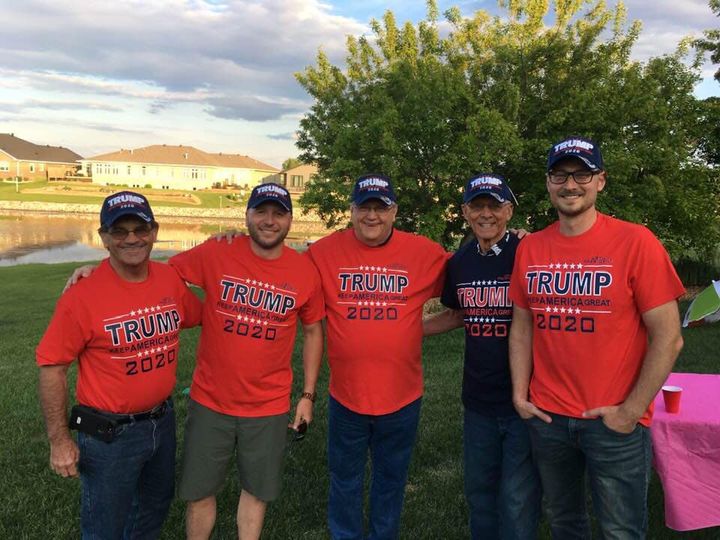
Above are some South Dakota politicians who are proudly standing up for the traditions of lying (more than 26,000 lies on Trump's record as president), crotch-grabbing, malice toward all, and deep dives into incompetence.  They are the malignant cells, the pall bearers of democracy.   The criminal class  has its cheerleaders.


Wednesday, May 18, 2022

America was killed by its firing squad

America, rest in peace.


Every bullet fired in a mass shooting strikes the heart of America.  And America leads the world in the death rate from mass shootings.

Typical (Median) Annual Death Rate per Million People from Mass Public Shootings (U.S., Canada, and Europe, 2009-2015):

  1. United States — 0.058
  2. Albania — 0
  3. Austria — 0
  4. Belgium — 0
  5. Czech Republic — 0
  6. Finland — 0
  7. France — 0
  8. Germany — 0
  9. Italy — 0
  10. Macedonia — 0
  11. Netherlands — 0
  12. Norway — 0
  13. Russia — 0
  14. Serbia — 0
  15. Slovakia — 0
  16. Switzerland — 0
  17. United Kingdom — 0

The press and most people do not want to admit that the shootings are the main symptoms of America's failure as a nation.  It has failed in meeting its purpose as laid out in the Constitution:  "to form a more perfect Union, establish Justice, insure domestic Tranquility, provide for the common defence, promote the general Welfare, and secure the Blessings of Liberty."

That's because the prevailing notion in America is that the major blessing of liberty is the right to stalk around the country with an assault weapon and blast the life out of anyone you feel like.  That right takes precedent over any matters of domestic tranquility, common defense, general welfare, or justice.  The right to bear a lethal weapon any time or place you choose and blast away with it overrules your right to life.  Unless you are a fetus.  According to the prevailing powers that be.  

We had a great weekend highlighted by America's favorite patriotic sport:  the mass shooting in Buffalo, N.Y., one in Milwaukee; one in Laguna Woods, Ca.; and one in Houston.  Are we a great country or what?

When Colin Kaepernick kneeled during the national anthem to note one of America's defining failures regarding the shootings of unarmed black people by police, he was widely denounced as unpatriotic.   When Black Lives Matter organized to protest those killings, the brilliant retort was that all lives matter.  But week after week, the news reports that in America, lives do not matter at all.  And that is the will of the people.  It was affirmed in the jury trial of Kyle Rittenhouse in the killing of a couple of people in Kenosha, Wis., for which he was acquitted.

The America envisioned in the preamble to the Constitution is dead.  For some people, it was never alive.

Sunday, May 8, 2022

Lynch them abortionists, burn them books


I have lived in South Dakota for 43 years, half of my lifetime. After four decades, South Dakota has never become home to me. The state has some attractive qualities, but they are overshadowed by some corrupting factors that are a serious malignancy. I ended up here because I found a professor's job here at a time when the U.S. higher education system had produced far more doctorates than there were jobs nationally. I felt fortunate to get the job. At the time South Dakota was not much different than its midwestern neighbors. But as the 21st century progressed, the state went on a regressive course that disqualifies it from being considered a democracy.

I moved here from Illinois where I was a registered Republican, what is termed a Lincoln Republican. My special area of study and teaching is Native American literature. Before moving here, I had developed many contacts within the state with whom I met and corresponded in the course of my work. But after I had been here for a while, I noticed a coolness from my Native American associates. I mentioned it to a friend from Pine Ridge. He said the coolness was because I had become an employee of the state of South Dakota. Therefore, my contacts were not sure I could be trusted.

That situation was a reflection of a defect in the state that has grown into a major deformity. With nine tribal nations holding territory in the state, there has always been tension since the western Indian wars. But rather controlling and diminishing discrimination and racial hatred, the state has firmly developed in a way that establishes those defects of mind and character as an identifying part of the culture. It has established a single-party system of governance that solidifies and perpetuates a philosophy that is in basic contradiction to the moral and intellectual premises of American democracy. Ignorance and malice are considered admirable traits. When it came time for me to vote, I registered as a Democrat.

The problems in South Dakota are reflected in the daily news:

  • A hotel in Rapid City posts a notice that it will not allow Native Americans to stay there.
  • Some school board members announce that they intend to destroy some books.
  • The people establish a referendum to decriminalize the possession of marijuana. It passes, but the governor finds a way to obstruct it.
  • A panel of 40 people, many of them classroom teachers, produced a set of standards for teaching social studies in the public schools. The Department of Education edited out requirements for Native American history and sent it to the governor who rejected the entire project and appointed a panel of her pet hacks to create standards more to her liking.
  • South Dakota still vies for top place in leading the nation in the brain drain, the loss of talented and educated people to other states.
  • SmartAsset ranks the South Dakota higher education system as the worst in the nation.
South Dakota has created a fantasy that it is a place of honest, kind, hard-working people of good will. The news coming out of the state refutes that myth. So does the voting record of its people during the 21st century.

The facts show that if you wish to live in a place of good will, nice people, and a functioning democracy, South Dakota isn't it.


Sunday, May 1, 2022

When you look in the mirror, do you see Donald Trump?


Long before Donald Trump became a political figure, he was known as a quintessential asshole:  "
Whenever Trump has been in positions of power or authority, he has demonstrated a pattern of trying to enrich himself by abusing the trust others have placed in him — whether it’s creditors, contractors, charitable givers, Trump University students, regulators, or campaign donors."

The problem is, what does it mean when a country freely elects person of Trump's character as their leader?  Well, it means that they are either hopelessly stupid, or that they admire and share his depravity.  Click on the headline below for a quick summary of his offenses.


A rap sheet for a former president


To support and vote for Trump is a disavowal of what America is supposed to be.  He is the opposite of any of the things to which the founders aspired.  Except wealth.  And his was not earned.  It was inherited and increased through swindling and cheating.

There are many political observers who think Trump ended America.  There were 74,224,319 people who voted for Trump in 2020, who registered their objections to a liberty free from dishonesty and malice.  Trump is not the cause of America's descent into turpitude. He is its clarion.

Some people tend to dismiss objections to Trump as the usual partisan politics.  They regard Trump as just having a differing opinion on how the republic should be run.  To  hold that stance, one has to ignore the anti-democratic and corrupt things Trump has done and said.  With Trump as leader, the United States' reputation in the world has plummeted.  

The election of Joe Biden to president in no way redeems America.  It merely delays its failure for a time.  The anti-democratic forces are gaining dominance throughout the world. The failure of democracies is not because of the strength of authoritarians;  it's because of the weakness of the people.  Russia is a case in point.  After throwing off the Soviet regime for a short time, the people put one of its stalwarts--Putin, former KGB officer--back in charge.

Botox unmasked
South Dakota is a bellwether for the decline of America.  It is devoted to a self-preening bumbler of a governor who seems to think a recitation of Trump inanities and a grotesquely botoxed visage makes her presidential material.   She put the state in the national spotlight when she paid a half million dollars for a new state slogan:  "Meth.  We're on it."  She is the chosen image for the state.  

She along with her idol, Trump, are evidence that American democracy is circling the drain.  While some good things are happening in America, Trump and Noem are like malignant tumors on the political body.  They can drain the life out of it.


Friday, April 22, 2022

For some U.S. citizens there is no America

The feature editor devoted a full newspaper page to an interview with a juvenile delinquent and his experience with the justice system.  It received so much response that the managing editor decided to do a series on criminal justice.  I was assigned to interview a prison chaplain. 

The chaplain had been involved with gangs as a youth and had been sent to prison.  While there, he joined a religious brotherhood and studied to be a priest after he served his sentence.

The chaplain had some harsh perspectives on criminal justice.  He said prisons were self-defeating.  Sending offenders to prison was like sending them to graduate school in crime, he said.  Prison did not rehabilitate some convicts as much as educate them in how to be more adept criminals.  He said once people are branded as convicts, their opportunities are limited when they are released from prison.  In order to resume a life, they often revert to criminal activity because they are denied better opportunities.  He said those recidivists are termed habitual offenders, when in fact society rejects them and they must scrabble to find a way to stay alive.  

The priest was adamant about the failures of the criminal justice system, and he spoke often about criminal justice and prison reform. I asked him about who were the most dangerous people he encountered in prison.  He said the wrongfully convicted.  He told of men who became model prisoners so they could get out and avenge themselves on the society that had wrongfully placed them in prison.  He said that a wrongful conviction to some is irrefutable proof that society is malevolent and the idea of justice merely makes the gullible unwary about how the people around them are looking for people to victimize.

Wrongful convictions are dangerous for society as a whole.  They undermine trust in government.  They are failures of justice and convince some people that there is no such thing.   That interview with the prison chaplain was more than 55 years ago, and it sparked a concern among fellow journalists.  While there are many innocence and justice projects throughout the nation largely organized by lawyers, early efforts at exonerating the wrongfully convicted were made by journalists.  One of the first organizations to investigate wrongful convictions began in the Medill School of Journalism at Northwestern University.  But long before the formal organization was created, journalists were confronted with claims of innocence by incarcerated individuals.  The news media was the court of last resort, and that series on criminal justice published by the newspaper I worked for almost 60 years ago raised a great deal of controversy.  

Readers were disturbed by the idea that there were wrongful convictions.  Although the story had just mentioned wrongful conviction and contained no conjecture about its frequency, the reactions were intense.  Many people took refuge in the cliche that most convicts claim they are innocent.  Some, especially from law enforcement, were indignant at the suggestion that the criminal justice system could make frequent errors. There was a hysterical reaction among a few that a wrongfully convicted person had completed his sentence and was on the prowl in society looking to avenge himself.  

That idea of a vengeful, innocent ex-convict produced such intense reactions that the editor had me call the prison chaplain to see if he knew of any such men who had gotten revenge.  He said he was not aware of any cases in which a violation of law was involved, but he knew of a couple in which the former convicts dedicated themselves to digging for incriminating information on the people who accused them.   However, he re-emphasized that the convicted innocent had good reason to be cynical about criminal justice because they were living proof that the innocent were undeservedly punished at times.  They can sue the state for the damages they incurred, but they have good reason not to trust the courts.  The chaplain said that the wrongfully convicted who were released from prison tended to fall into two extremes: those who were grateful and happy to regain their freedom, and those who were bitter and resentful over their false conviction.  Those latter were the dangerous ones because they harbored a hostility and contempt toward society and tended toward antisocial activities.  He said a few of the exonerated were so embittered that the wardens were fearful about releasing them.  Some exonerated seemed to think that they had paid for a crime, so now they owed it to society to commit it.  However, the states have seen the need for extensive rehabilitation measures in such cases to provide some mitigating services to the wrongfully convicted. 

When DNA technology developed as a tool in criminal justice,  the number of wrongful convictions discovered increased markedly.  There are studies on how and why wrongful convictions occur:  "Wrongful convictions statistics show that the main reasons many end up behind bars are misidentification, official misconduct, false testimony, perjury, false accusation, and false confession."   The number of organizations devoted to the investigation and prosecution of wrongful conviction cases has also increased.  The public seems largely aware that wrongful convictions occur, but thinks little about the consequences as they affect general society. 

Netflix has a series of documentaries covering wrongful convictions and how they devastate people touched by them.  One is an 8-part feature entitled Trial-4.  Another is the 10-part Making a Murderer.  They both examine the dysfunction of our justice system.  Although the films do not focus on the harm a wrongful conviction does to the society around its subjects, it is clear in the films that wrongful convictions leave a toxic residue on our communities.  But they also grow out of the of prejudice, malice, and dishonesty that our communities harbor.  "Making a Murderer"  includes the story of a 16-year-old boy with a low IQ whose confession is dubious in the extreme but is a key factor in the conviction of him and his uncle for murder.  One of the lawyers in the case contributed to an article in the Chicago Tribune that explains how false confessions are solicited from the young and vulnerable: 

Consider the case of Trevon Y. of St. Clair County, Illinois. In 2013, Trevon was a 17-year-old Black teenager with no criminal history but with developmental disabilities that rendered his mental functioning akin to a much younger child. After a tipster implicated someone named “Trevon” in a local armed robbery, police brought Trevon Y. in for questioning.

The ensuing hours long interrogation was captured on tape — and what the tape shows is disturbing. Even though Trevon tearfully asserted his innocence more than 35 times, detectives relentlessly insisted that they “knew” he was involved. At least 40 times, they falsely told Trevon that witnesses had identified him as the perpetrator. He was trapped, the police insisted, and the only way out was to confess. Indeed, the investigators falsely promised that if Trevon confessed, he would be viewed as “just a young kid who made a bad decision” and avoid incarceration.

Relying on his interrogators’ assurances, Trevon agreed to confess and repeated the story officers fed him about the crime. He spent nine months in jail, facing the possibility of a decades long armed robbery sentence, before prosecutors watched his interrogation video, realized his confession was false and dropped the case.

Trevon is hardly alone: Illinois has been home to more than 100 false confessions across the state...

We Americans like to decry Nazi concentration camps and the Russia of Putin which jails people who speak out against him.  But we live in a country that in its mass incarceration pogrom jails blacks at five times the rate it jails whites.  And as the documentaries show, the criminal justice system likes to beleaguer the poor.

For many people, and especially the wrongfully convicted, America is no different or better than Nazi Germany or Soviet Russia.  Or ante bellum America.  If the country fails for the wrongfully convicted, it fails for everyone.  

 America, the beautiful?  Get real, patriots.  America, the failure.


Friday, April 1, 2022

The bitch-slap heard 'round the world

Will Smith strode across the stage at the Academy Awards ceremony, and bitch-slapped Chris Rock right in the face.  I come from a time and place where if that had happened on the street, Will Smith would have been the target of a well-honed knife blade or razor, and spectators would be yelling to call an ambulance because a lot of blood was about to be spilled. A slap on the face conferred disrespect and humiliation on the recipient, who would be expected to retaliate with vigor.

While in high school, I had a part time job as a stock boy in a  department store.   There was a fire station across the alley, and some of the firemen worked in the store receiving department on their days off.  The firemen had a bossy attitude toward the stock boys. One day when a fireman told a stock boy to do something, the boy responded with, "You aren't my boss," and the fireman slapped his face.  The boy grabbed a wooden 2-by-2 used as a guide for cutting wrapping paper and whacked the fireman on the side of the head with it.  The fireman, resorting to his city hall connections, called the police, who showed up quickly.  The problem was that there were a number of witnesses who said the stock boy was acting in self-defense, and the police called their headquarters for advice on how to handle the situation.  They were told that the stock boy was acting under extreme provocation and if the fireman hadn't been severely injured to drop the matter, which they did.  The fireman was the aggressor.

The manager of the receiving room changed the work schedules so that the fireman and the stock boy were never working at the same time.  He eventually eliminated the fireman from the schedule altogether.  He said he didn't want to have to deal with the kind of employee who went around slapping people in the face.  And other employees didn't want to work with the fireman, either.  

The kind of person who uses a face-slap to deal with some issue raises an attitude of contempt in most people.  The act says more about the slapper than it does the slappee.  Even if the slapper is responding to a verbal insult, the physical act of slapping denotes a person out of control.  A slap in the face is an invitation to fight.  It settles nothing, but leaves spectators waiting for the next blow and wondering what form it will take.

And so, we wait for the next blow.

Blog Archive

About Me

My photo
Aberdeen, South Dakota, United States

NVBBETA